
NGC 7000
Caldwell 20, The Cygnus Wall
Capture Credit: Kyle Ingersoll & FAObservatory
Click image to pinch/zoom
Target Details
At a distance of roughly 2590 light years, the Cygnus Wall region is but a portion of a much larger cloud complex, known as the "North America Nebula." It is the region of the North America Nebula containing the highest concentration of gas and, thus, new star formation. Another notable feature of this target is the presence of dark molecular clouds.
Emission nebulae are illuminated by stars that shower and ionize their gases with ultra violet radiation, causing them to glow. The entirety of the North America Nebula is thought to be ionized by a nearby hot spectral type O3.5 star, with another hot star in orbit!
Wait, what exactly is a nebula in the first place? Well, nebulae come in many forms, ranging from very small planetary nebulae resulting from the deaths of stars to massive emission nebulae, which consume great swaths of their parent galaxies, and more.
Click image for annotated version
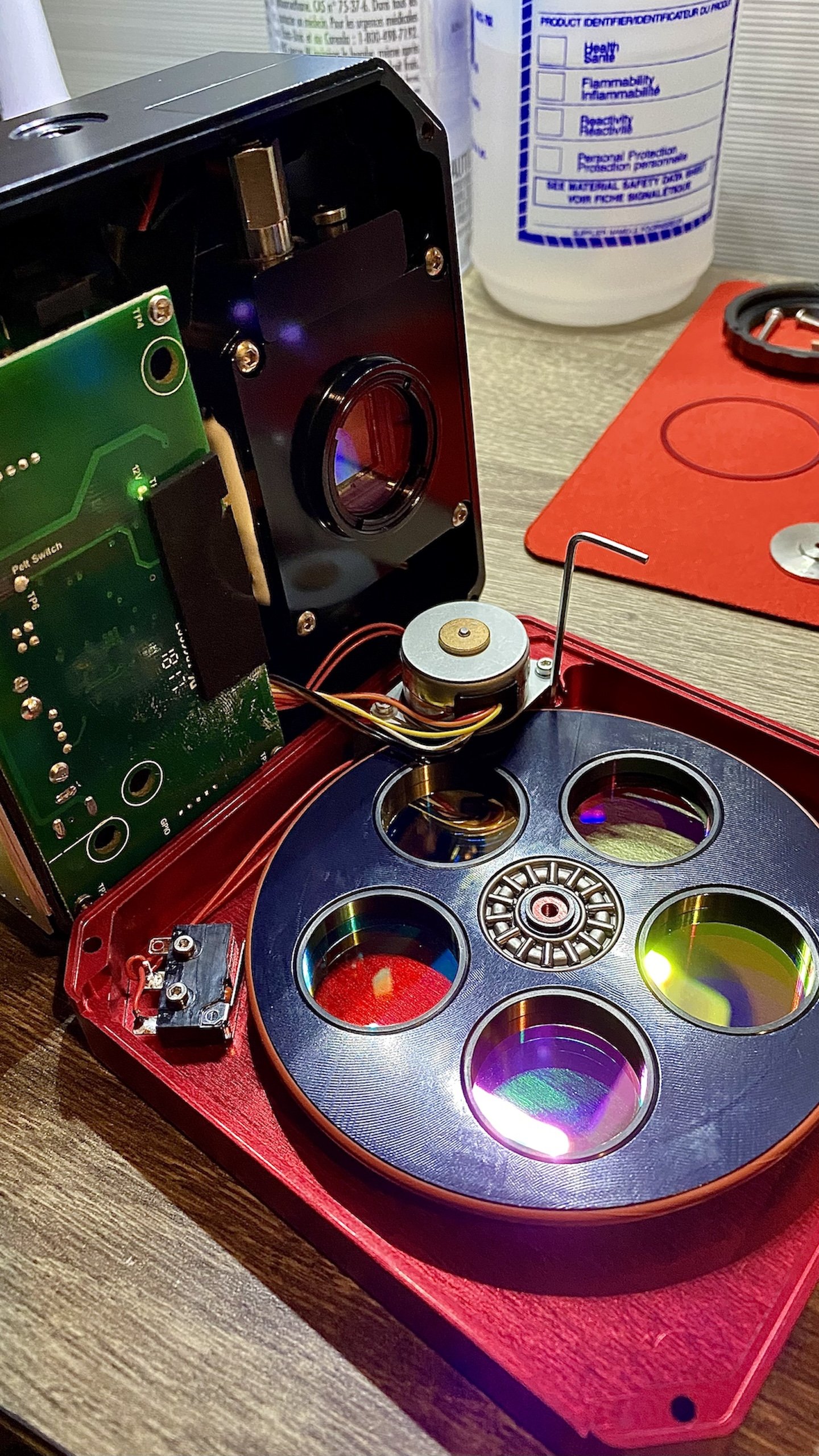
Capture Details
This image represents 10.92 hours total exposure on target, through 5 individual filters as follows:
17 x 5 minute Luminance subs
20 x 15 minute H-Alpha subs
18 x 5 minute Red subs
18 x 5 minute Green subs
18 x 5 minute Blue subs
–14 flats for each filter, 21 darks, & 28 bias
All light frames were captured at scales of either 0.82”/pixel, or 1.68”/pixel with the camera sensor cooled to -13.01°celsius to reduce noise. Acquisition took place between the dates of 15/07/2021 & 17/07/2021. Full capture credit belongs to Fundy Archipelago Observatory.
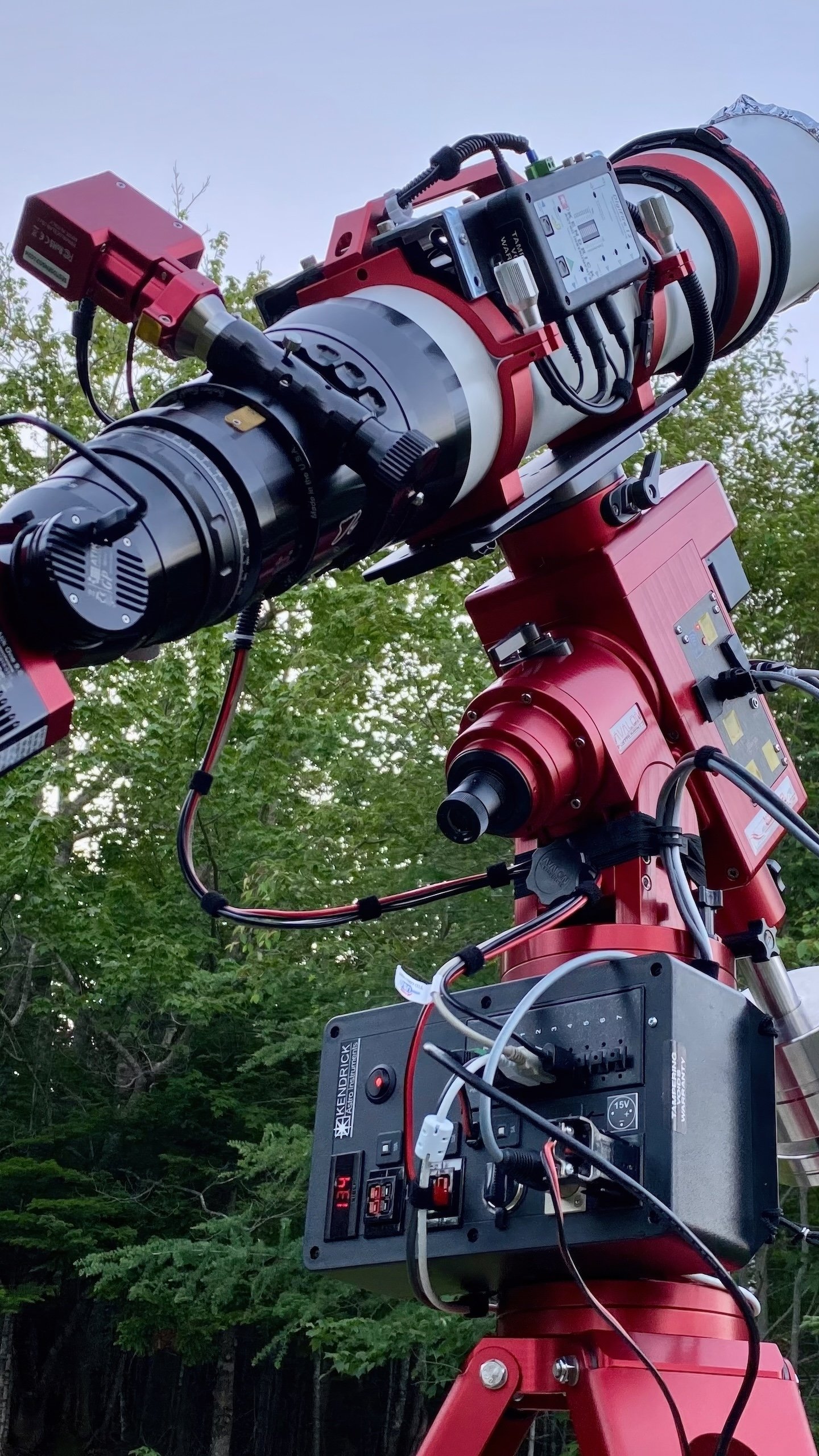
Equipment Details
-
Name: Fundy Archipelago Observatoy
Location: Grand Manan, NB, Canada
Coordinates: 44.699038° N, -66.782410° W
Elevation: 58.9 m -
WO FLT-132 refractor (925mm focal length)
WO 1x field flattener
Atik One 9.0 integrated OAG (pick-off prism)
Chroma LHRGB filter set -
Avalon Linear German equatorial mount
T-POD 130 tripod
WO m92 field rotator
3.5” Feather Touch R&P focuser
WO clear Bahtinov mask -
Atik One 9.0 monochrome CCD camera
Atik GP planetary camera (guiding)
PoleMaster assisted polar alignment camera
Kendrick Astro Instumets DigiFire & USB/power hubs -
ASCOM
N.I.N.A.
Avalon StarGo
PHD2
Cartes du Ciel
PixInsight